Forming Educator-Witnesses for a New Era
“Education, by contrast, is a long journey requiring patience, and therefore needs time for development and for engagement with reality beyond appearances.”
– Pope Leo XIV, Magnifica Humanitas, §140
The Human Person and the Mission of Catholic Education
In his recent encyclical Magnifica Humanitas, Pope Leo XIV reflects on the splendor and magnificence of our humanness – a humanness revealed and perfected in the person of Jesus Christ. Created in the image and likeness of God and destined for eternal communion with Him, the human person possesses a dignity unlike any other creature. Pondering this reality alone stokes the embers of wonder and amazement within us. One can almost hear the words of the Psalmist echoing aloud: “For I am fearfully and wonderfully made” (Psalm 139:14).
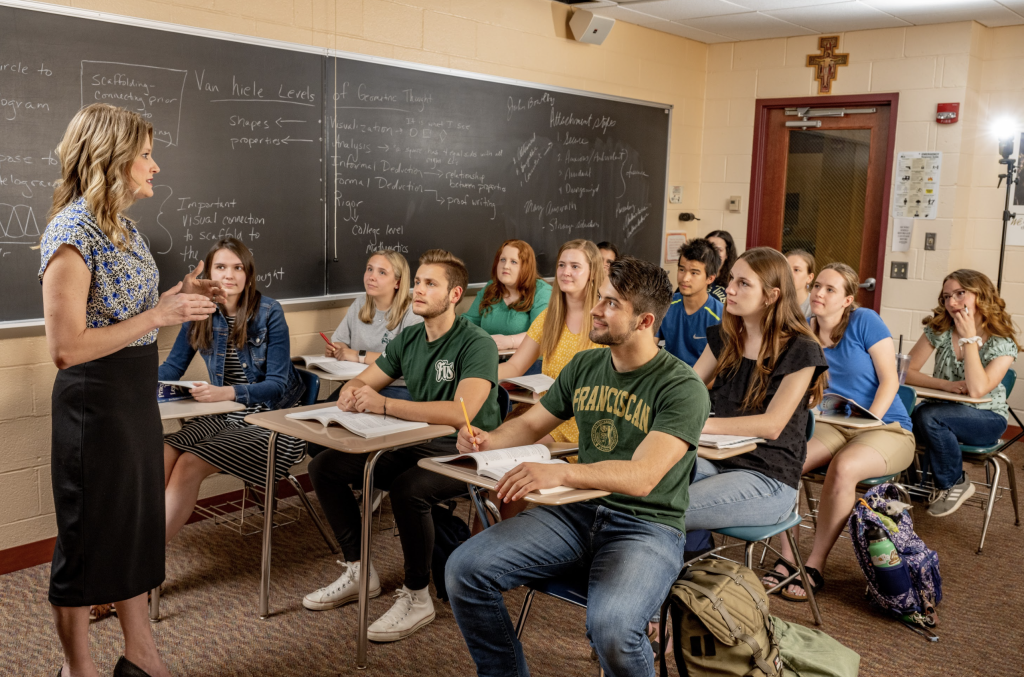
Yet ours is a moment in history when the very essence of what it means to be human is increasingly obscured. Our abilities to think, grapple, create, reflect, relate, and work – gifts uniquely human and essential to our flourishing – are often diminished by the pace, distractions, and “conveniences” of modern life. As Pope Leo reminds us in Magnifica Humanitas, education plays a crucial role in confronting these ever-evolving, complex cultural challenges. If education is to be truly authentic and responsive to our God-given humanity, it must address every dimension of our personhood, foster integral human formation, and cultivate within us a genuine love for truth, reflection, and discernment.
This educational mission begins with the domestic church itself – within the family, through parents who serve as their children’s primary teachers. But it extends beyond the home – to schools and Catholic educators alike – who must come alongside parents and serve as privileged partners in forming and evangelizing the whole person. For at its heart, Catholic education seeks not merely to inform minds but to form souls.
At this pivotal point in time, the Church has a pressing need for faithful, well-formed educators whose vocation, worldview, and classroom practices are rooted in Christian anthropology and inspired by a supernatural vision of education – a vision captured so beautifully by the words of St. Augustine: “You have made us for yourself, O Lord, and our hearts are restless until they rest in you.”
Franciscan University’s Response
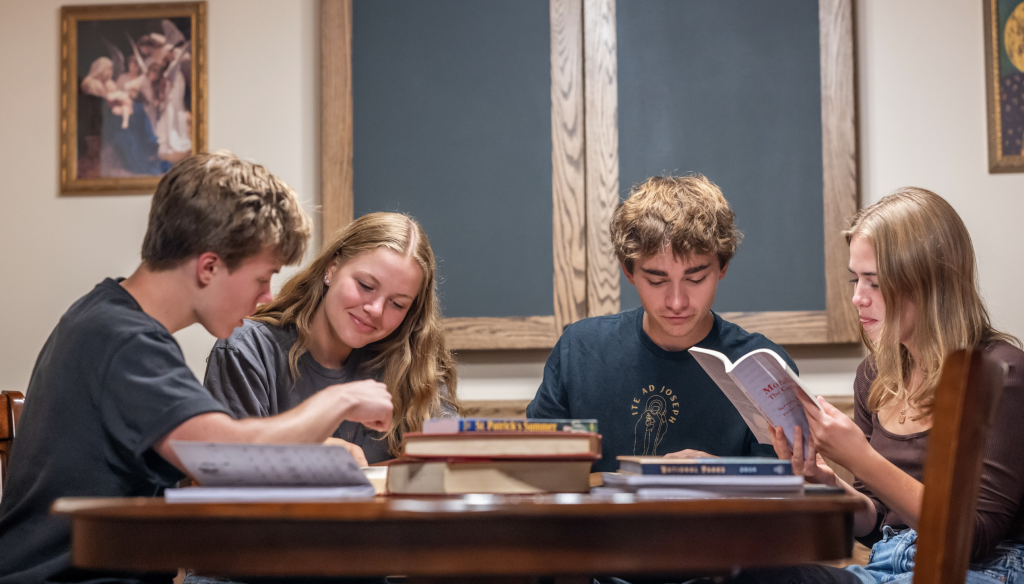
It is precisely in response to this need that Franciscan University has developed a Master of Arts in Education (MAEd) program (pending approval) grounded in Christian anthropology and Catholic educational philosophy.
Imbued with the Franciscan charism and aligned with the University’s mission to educate, evangelize, and send forth joyful disciples empowered by the Holy Spirit, this new MAEd program embraces the Church’s understanding of education as a means of both personal sanctification and social reform in light of Christian values. Through coursework in Christian anthropology, Catholic educational philosophy, Catechetics, pedagogy, curriculum models, practitioner-based research, and so much more, the program enables Catholic educators and leaders to grow in both professional excellence and the truths of the Catholic faith. Graduates will be prepared to serve as master teachers, leaders, and agents of evangelization and revitalization within Catholic schools and beyond. Central to the MAEd curriculum is Catholic academic integration: the permeation of curriculum and instruction with an authentically Catholic worldview while honoring the integrity of each academic discipline. For educators ready to respond to this need, the MAEd program offers an exciting and concrete path for advanced study.
Pending final approval, the program is scheduled to launch in Summer 2027 and will be delivered through a fully online cohort model that balances flexibility with purposeful preparation and the cultivation of community. The program will also offer specializations in Catechetics and Evangelization and Catholic Studies, two areas that not only reflect Franciscan University’s distinctive mission, but which emerged as desired fields of study through extensive conversations with Catholic teachers and school leaders nationwide.
Ultimately, the MAEd program seeks to meet a growing need within Catholic education for graduate teacher formation that is both academically rigorous and deeply faithful – a formation capable of equipping educators to navigate the challenges of the present moment while remaining firmly rooted in the Church’s view of the human person and the purpose of education.
A Personal Connection
The vision behind the proposed MAEd program is deeply personal for me. At Franciscan University, I am blessed to serve as the Dean of the School of Professional Programs, Professor of Education, and faculty sponsor for this new initiative.
I am also the product of faithful K-12 Catholic education and a proud alumna of Franciscan University. If I could describe my own Catholic school experiences in one word, it would be this: transformative. What made my experiences so transformative was, in large part, the culture of the Catholic schools that my seven siblings and I were blessed to attend. The life of the schools was anchored and animated by prayer, the sacraments, and a rich integration of faith and reason throughout the curriculum. This culture, together with the witness of teachers who were virtuous and passionate about the subjects they taught, cultivated within me a profound thirst for truth – a thirst which ultimately drew me closer to Christ.
I found that no matter what I studied in school– whether literature, history, chemistry, or even calculus, a subject I deeply loved as an eventual mathematics and secondary education double major – I gleaned far more than academic understanding. Each subject became a window into deeper realities and an invitation to encounter not just truth, but He who is the Truth. While I didn’t fully recognize it at the time, what my teachers were cultivating within me was a sacramental imagination – an opportunity to see the Divine in all things. What an extraordinary gift!
It is perhaps for this reason that the following passage from the Sacred Congregation for Catholic Education’s seminal document Lay Catholics in Schools: Witnesses to Faith resonates so deeply with me: “One specific characteristic of the educational profession assumes its most profound significance in the Catholic educator: the communication of truth. For the Catholic educator, whatever is true is a participation in Him who is the Truth; the communication of truth, therefore, as a professional activity, is thus fundamentally transformed into a unique participation in the prophetic mission of Christ, carried on through one’s teaching” (§16).
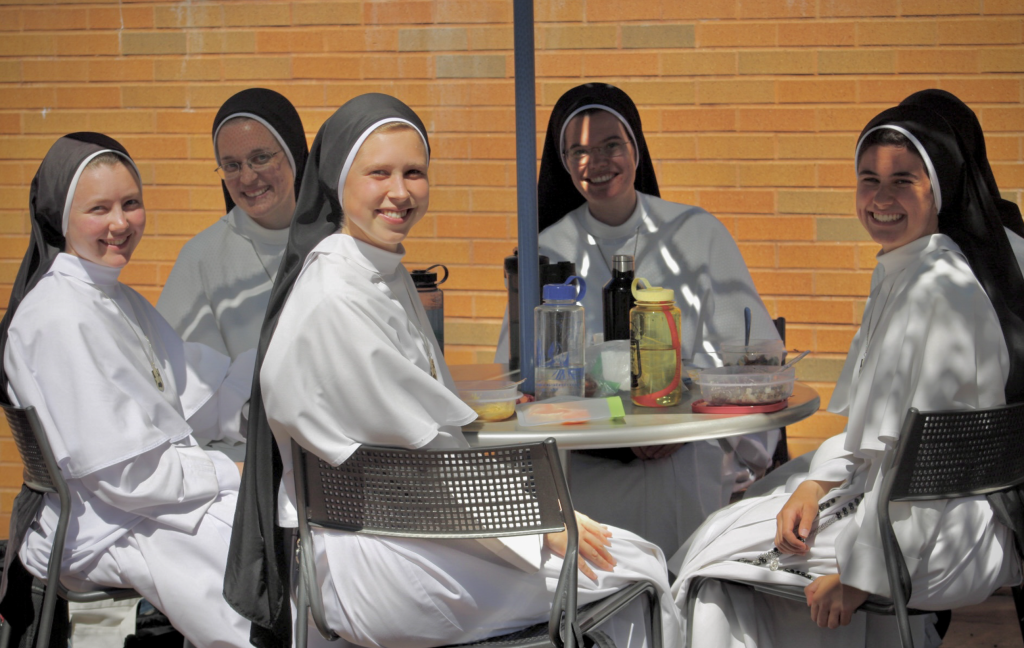
If every act of authentic teaching is a participation in Christ’s prophetic mission, then teaching is far more than a job. It is a sacred vocation and a clarion call. And now, perhaps more than ever, I believe the Church needs a new generation of holy, tireless educator-witnesses – an army of St. Elizabeth Ann Setons, St. John Boscos, St. Frances Cabrinis, and St. John Neumanns – who will courageously labor in the vineyard of the classroom, faithfully mirroring Christ, who is the perfect teacher and our very model and means.
An Invitation
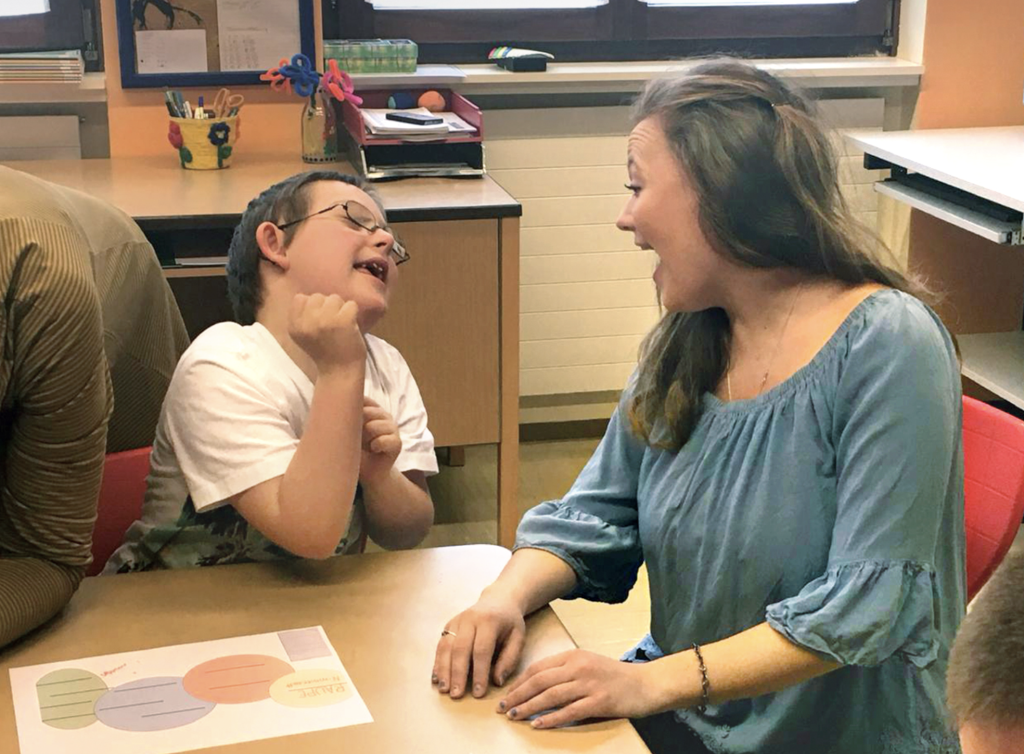
Such is the vision of Franciscan University’s new MAEd program. By God’s grace, those who study in the program will go forth to help future generations discover what I did through my own Catholic education – that every authentic encounter with truth can become a transformative encounter with Christ Himself.
Dr. Rebecca Rook
Dean of the School of Professional Programs
Professor of Education
rrook@franciscan.edu