“The soul of education is the education of the soul.” St Elizabeth Ann Seton
Elizabeth Ann Seton possessed an authentically Catholic and fully integrated view of the human person that led to a deep and profoundly good impact on the lives of millions of children and the education system as a whole.
The modern education system, however, operates off a false dichotomy, an error in thinking, that runs deep from within the veins of the culture resulting in its steady decline. To the modern world, education is a purely mental endeavor that ignores the physical or spiritual aspects of the human person. The origin of this false idea is a Cartesian, dualistic, view of the human person.
Unlike a well-made piece of clothing created by sewing together pieces of fabric or a bolted-and-welded-together vehicle made of various parts, human beings are not separate entities (body, mind, and spirit) somehow held together. And the mind is not somehow superior to the body or the spirit.
Instead, we are actually a mysterious unity of body, mind and spirit – three kinds of creation united together while also maintaining some reality of difference. It is an error (and a heresy!) to deny one or the other as being essentially human, and it is to disregard the full revelation of Jesus in the Incarnation to deny the unity of the three.
Since the majority of us are not philosophers, this idea on its own does not necessarily induce excitement in everyone. However, this truth has dramatic effects on our human journey towards excellence, thriving, and flourishing! It also has dramatic effects on educators and the educated alike. We need to understand this teaching in order to create an environment within our schools that truly leads everyone to, as St. John Paul II would say, become who they are.
At the CatholicPsych Institute we are working to help schools “fit the soul [of its students] for its destiny,” in two ways.
Grace Builds On Nature
If grace builds on nature (which we know it does), then the amount of grace moving within the life of a school and its members is profoundly impacted by the “nature” of its leaders. A teacher, for example, not only conveys knowledge and wisdom through her words but through her very nature.
Take, just as an example, the simple act of listening with Jesus as our model and our standard. Jesus revealed the path to us: He has called us to follow Him. As Pope St. John Paul II reminds us in Gaudium et Spes, Christ “fully reveals man to man himself and makes his supreme calling clear.” We see in Jesus someone who was able to be fully present to each person and willing to listen to the individual person regardless if it was a Roman guard, one of the Pharisees, or any one of the group He was adamantly against. When it came to the individual, He was willing to listen in love to understand where they were coming from first.
As an educator, how good of a listener are you? How big is your capacity to pour out your life for the sake of those you serve?
The ability for a teacher to meet that standard, to hold space to understand where a student is coming from and then have the capacity to respond in a way that meets that student where they are is deeply impacted by the emotional, physical and spiritual state of said teacher.
Every day, a teacher is bringing into the classroom the fullness of his nature. His spiritual health, physical health, and emotional health either helps him or hinders his efforts to walk his students in a meaningful way. We know this intrinsically, don’t we? If a teacher finds out she has cancer right before work, isn’t that news naturally going to impact her ability to be present to her duties as teacher?
That’s why I developed Prepared: An Experience Of Rest And Renewal for Ministers. It’s a one day inservice experience for everyone in a school, from the janitor to the principal, to discover or rediscover who they were made to be and develop the self-awareness needed to overcome inner obstacles to becoming who they were made to be.
For those who want to or feel they need to dive deeper, we even offer ongoing small-group support following the event to create a path to lasting personal transformation.
Imagine a teacher who embraces God’s unconditional love, understanding that their worth is not tied to achievements but rooted in being a beloved child of God. This self-acceptance enables them to extend the same unconditional regard to their students. They move from demanding perfection to fostering growth, from impatience to compassionate guidance.
Forming Attentive Minds and Strong Souls
For the last year, my team at CatholicPsych and I have been interviewing school leaders across the country to see how we might be able to support the efforts of schools to do as Elizabeth Ann Seton would say, “educate the soul.”
What we heard over and over again was, how do I help the children in my classroom grow interpersonally and not just in knowledge or in skills?
And in response, we’re developing a K-12 Curriculum entitled “Forming Attentive Minds.” Guided by the lives of the saints, the curriculum uses age appropriate material to deepen and strengthen students’ capacity for the following:
- Self-awareness
- Focus
- Self-compassion
- Self-control
- Stress Reduction
- Creativity
- Cognitive Flexibility
- Empathy
- Gratitude
- And Decision Making
There are great curriculums out there that teach math, science, history, theology, grammar and so on. And in short order there will be a curriculum that teaches young people to develop the inner skills and beliefs for personal flourishing.
The curriculum is set to release in the fall of 2025. To learn more about it or the Prepared workshop you can email our Program Director joelle@catholicpsych.com.
Conclusion
The call to educate the next generation is one of the most important and meaningful calls one can receive. And that call is to shape not just minds but whole persons—to “fit the soul for its destiny,” as Elizabeth Ann Seton envisioned. I hope we can do that together in the coming years!
Dr. Greg Bottaro
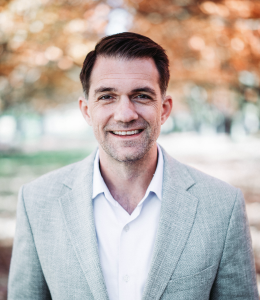
Dr. Bottaro is a clinical psychologist and founder of the CatholicPsych Institute. He received his Doctorate in Clinical Psychology from the Institute for the Psychological Sciences, a graduate school in Arlington, Virginia, that integrates Catholic philosophy and theology with sound, empirically validated psychology.
While discerning a religious vocation with the Franciscan Friars of the Renewal (CFRs), he learned how to hear God’s voice and live a life in service to others. He ultimately chose the path as a psychologist. The CatholicPsych Institute began in 2012 and has since grown to 5 offices with 12 therapists serving clients around the globe.